
Clinical chemistry analyzers remain indispensable in modern healthcare, enabling laboratories to perform critical tests—from liver function panels to metabolic screenings—with precision. As laboratories face mounting pressure to deliver rapid, accurate results while managing costs, the demand for advanced yet accessible analyzers has surged. This updated guide explores the top 9 clinical chemistry analyzers for 2025, incorporating emerging trends, technological breakthroughs, and real-world applications to help small to mid-sized labs make informed decisions.
Key Trends Shaping Clinical Chemistry in 2025
2025’s Top 9 Clinical Chemistry Analyzers
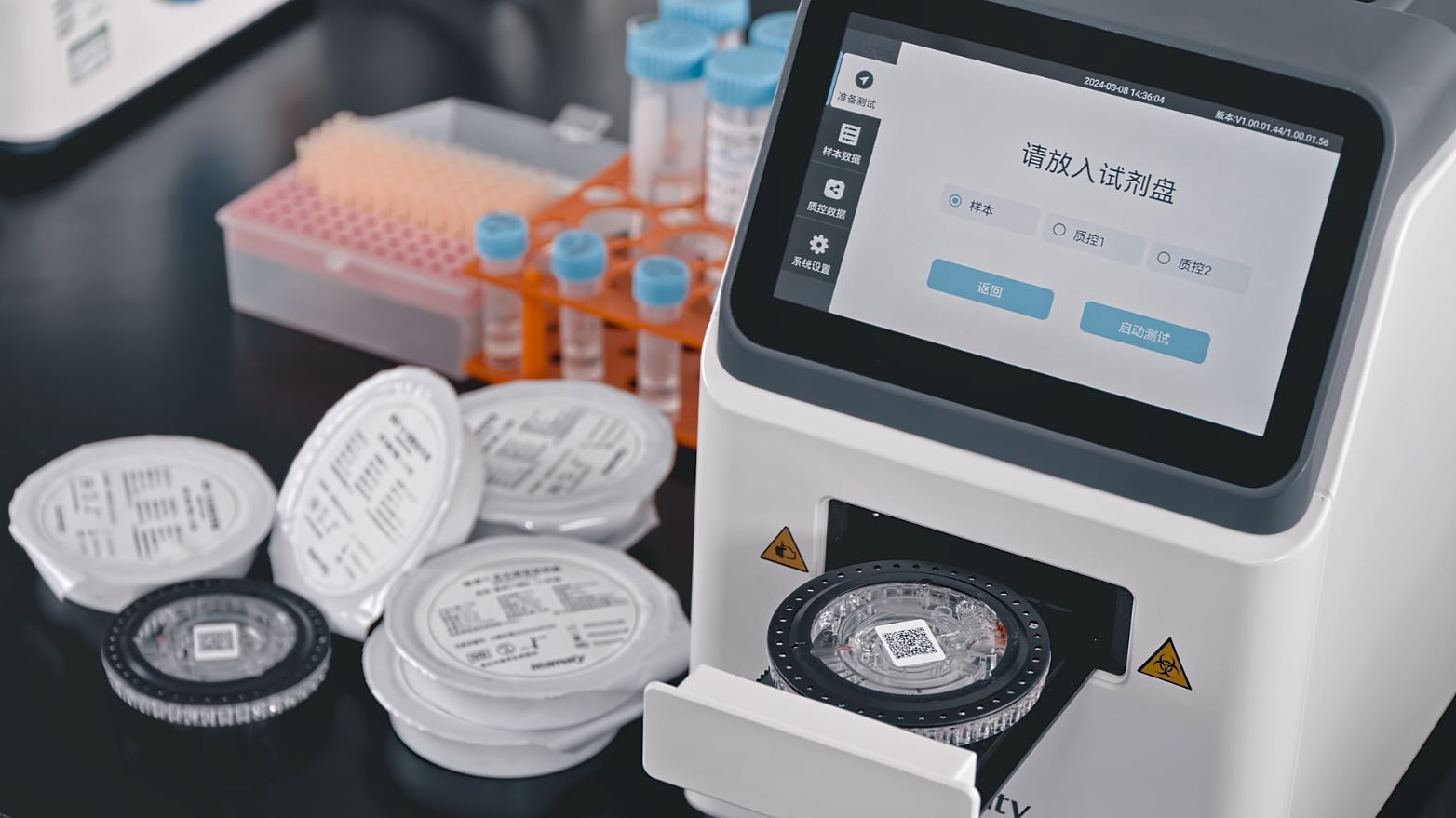
1. Seamaty SD1 Fully Automated Dry Chemistry Analyzer
Best For: Small labs prioritizing portability and ease of use.
Key Features:
- Requires 0.1cc sample volume (whole blood/serum/plasma).
- 12-minute turnaround with built-in centrifuge and QR code scanning.
- Cloud connectivity for remote decision-making.
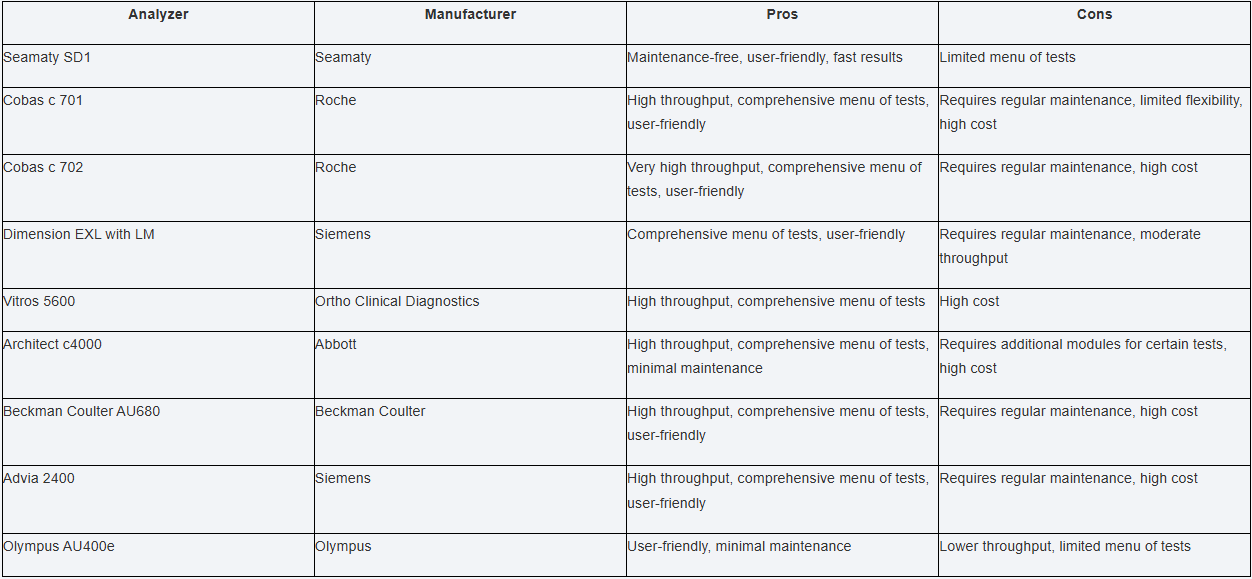
Pros: Maintenance-free, compact (ideal for fieldwork), real-time QC.
Cons: Limited test menu compared to high-throughput systems.
2025 Update: Now includes enhanced cybersecurity protocols for data protection.
2. Roche Cobas c 701
Best For: High-volume labs needing speed and versatility.
Key Features:
- 2,000 tests/hour with reflex/STAT testing.
- Broad menu: Electrolytes, enzymes, proteins, and drug monitoring.
Pros: High throughput, user-friendly interface.
Cons: High maintenance costs, premium pricing.
2025 Update: New software updates improve compatibility with EHR systems.
3. Roche Cobas c 702
Best For: Large clinics and hospitals.
Key Features:
- 3,000 tests/hour, the highest in its class.
- Automatic sample loader reduces hands-on time.
Pros: Unmatched speed, scalable for growing labs.
Cons: Expensive upfront and operational costs.
Innovation: Introduced reagent disc technology to minimize waste.
4. Siemens Dimension EXL with LM
Best For: Labs with diverse testing needs.
Key Features:
- Handles serum, plasma, urine, and special chemistries.
- 1,200 tests/hour with immunosuppressant drug monitoring.
Pros: Versatile, supports niche assays.
Cons: Moderate throughput vs. Roche models.
2025 Update: Enhanced AI-powered calibration reduces reagent use.
5. Ortho Clinical Diagnostics Vitros 5600
Best For: Space-constrained labs.
Key Features:
- 1,800 tests/hour in a compact footprint.
- Tests: Routine chemistry, infectious disease markers.
Pros: Low maintenance, ideal for clinics.
Cons: High cost per test.
Innovation: Patented dry-slide technology eliminates water dependency.
6. Abbott Architect c4000
Best For: Mid-sized labs needing flexibility.
Key Features:
- 800 tests/hour with STAT mode.
- Broad menu: Immunoassays, therapeutic drug monitoring.
Pros: User-friendly, minimal maintenance.
Cons: Requires add-ons for specialized tests.
2025 Update: New IoT-enabled modules enable predictive maintenance.
7. Beckman Coulter AU680
Best For: Labs prioritizing ease of use.
Key Features:
- 1,200 tests/hour with onboard QC.
- Intuitive touchscreen interface.
Pros: Low training requirements, reliable.
Cons: High cost of ownership.
Innovation: Introduced barcode-driven workflow to reduce errors.
8. Siemens Advia 2400
Best For: High-volume, multi-specialty labs.
Key Features:
- 1,200 tests/hour with 60+ assays.
- Specializes in immunochemistry and metabolic panels.
Pros: Comprehensive menu, robust design.
Cons: Requires dedicated lab space.
2025 Update: Added AI-driven auto-dilution for hyperlipidemic samples.
9. Olympus AU400e
Best For: Budget-conscious labs.
Key Features:
- 400 tests/hour with basic chemistry panels.
- Onboard calibration and QC.
Pros: Affordable, low maintenance.
Cons: Limited throughput and test menu.
Innovation: Reagent-saving mode cuts costs by 15%.
Critical Factors to Consider Before Purchasing
Conclusion
In 2025, laboratories must balance speed, cost, and flexibility. While Roche and Siemens lead in high-throughput innovation, compact models like the Seamaty SD1 empower smaller labs to deliver point-of-care excellence. By aligning analyzer capabilities with specific needs—test volume, menu breadth, and compliance—labs can future-proof their operations in an era of rapid medical advancement.