
Point-of-Care Testing (POCT) has revolutionized clinical diagnostics by delivering rapid, on-site results that drive timely treatment decisions—critical in emergency care, primary clinics, and resource-limited settings. However, not all POCT analyzers are created equal: reliability, accuracy, and adaptability to clinical needs are make-or-break factors for healthcare providers. Whether you’re equipping a small community clinic, a busy emergency department, or a veterinary practice, selecting the right POCT analyzer requires careful evaluation of core capabilities, brand credibility, and real-world performance.
Below is a comprehensive guide to choosing a reliable POCT analyzer, paired with insights into leading brands—including Chengdu Seamaty Technology Co., Ltd., a trusted global provider with a decade of expertise in POCT innovation.
Key Factors to Choose a Reliable POCT Analyzer
When evaluating POCT analyzers, prioritize these non-negotiable criteria to ensure alignment with clinical goals and operational efficiency:
1. Accuracy & Quality Certification
Reliable POCT results start with rigorous quality control and international certifications. Look for analyzers that meet ISO 13485 (medical device quality management) standards—an indicator of consistent manufacturing and performance. Additionally, real-time quality control (QC) features, such as automated calibration and sample integrity checks, prevent erroneous results that could compromise patient care.
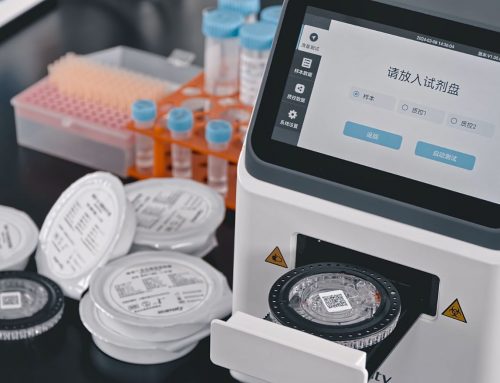
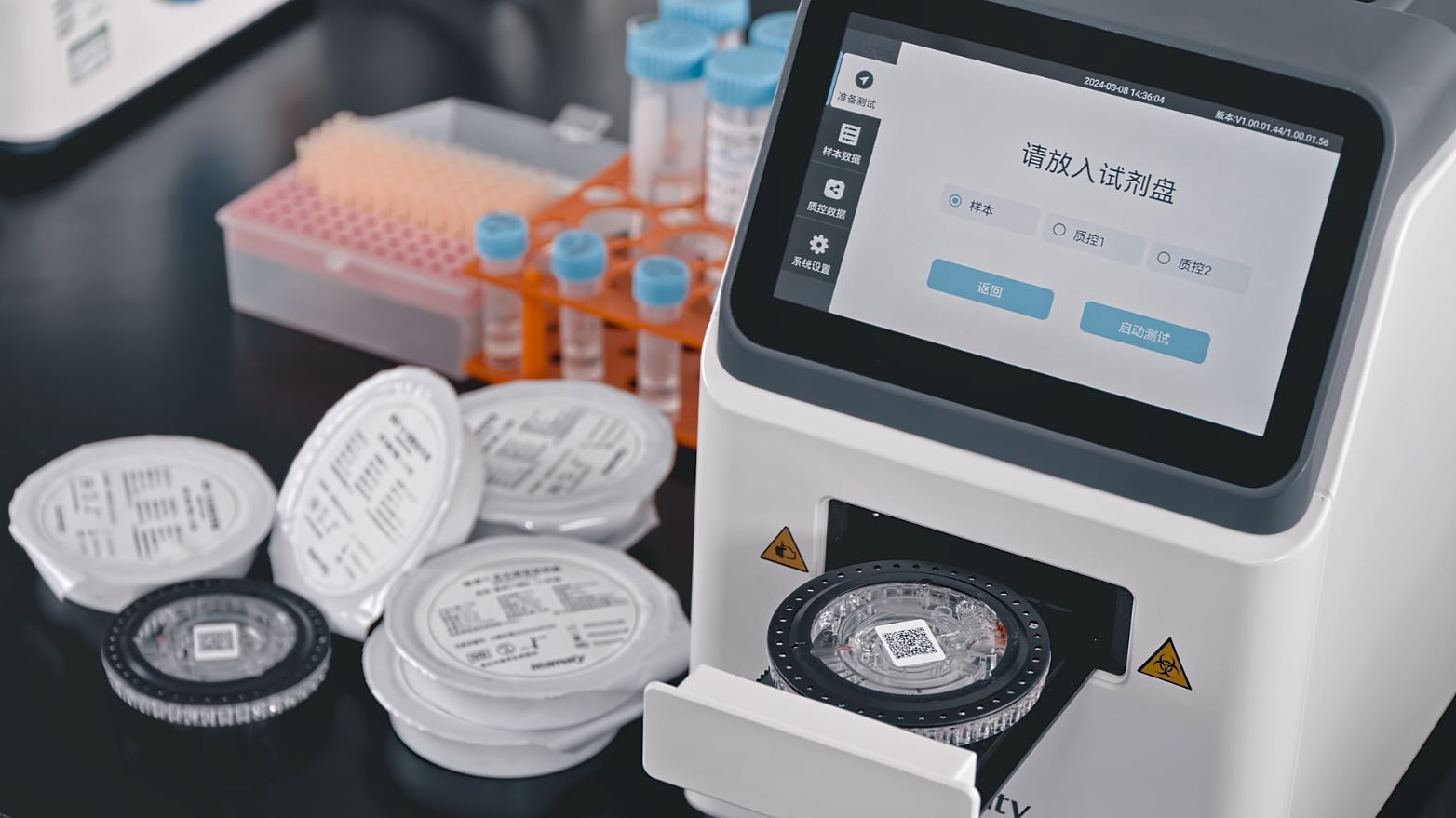
For example, analyzers with built-in QR code traceability for reagents (e.g., Seamaty’s chemistry reagent discs) ensure batch consistency, while real-time QC alerts users to clotted samples or sensor drift.
2. Speed & Turnaround Time
POCT’s greatest value lies in rapid results. Clinical scenarios like sepsis management or emergency resuscitation demand analyzers that deliver data in minutes, not hours. Evaluate both sample processing time (time from loading to result) and workflow efficiency—e.g., whether the device supports simultaneous sample testing to handle high patient volumes.
3. Ease of Use & Portability
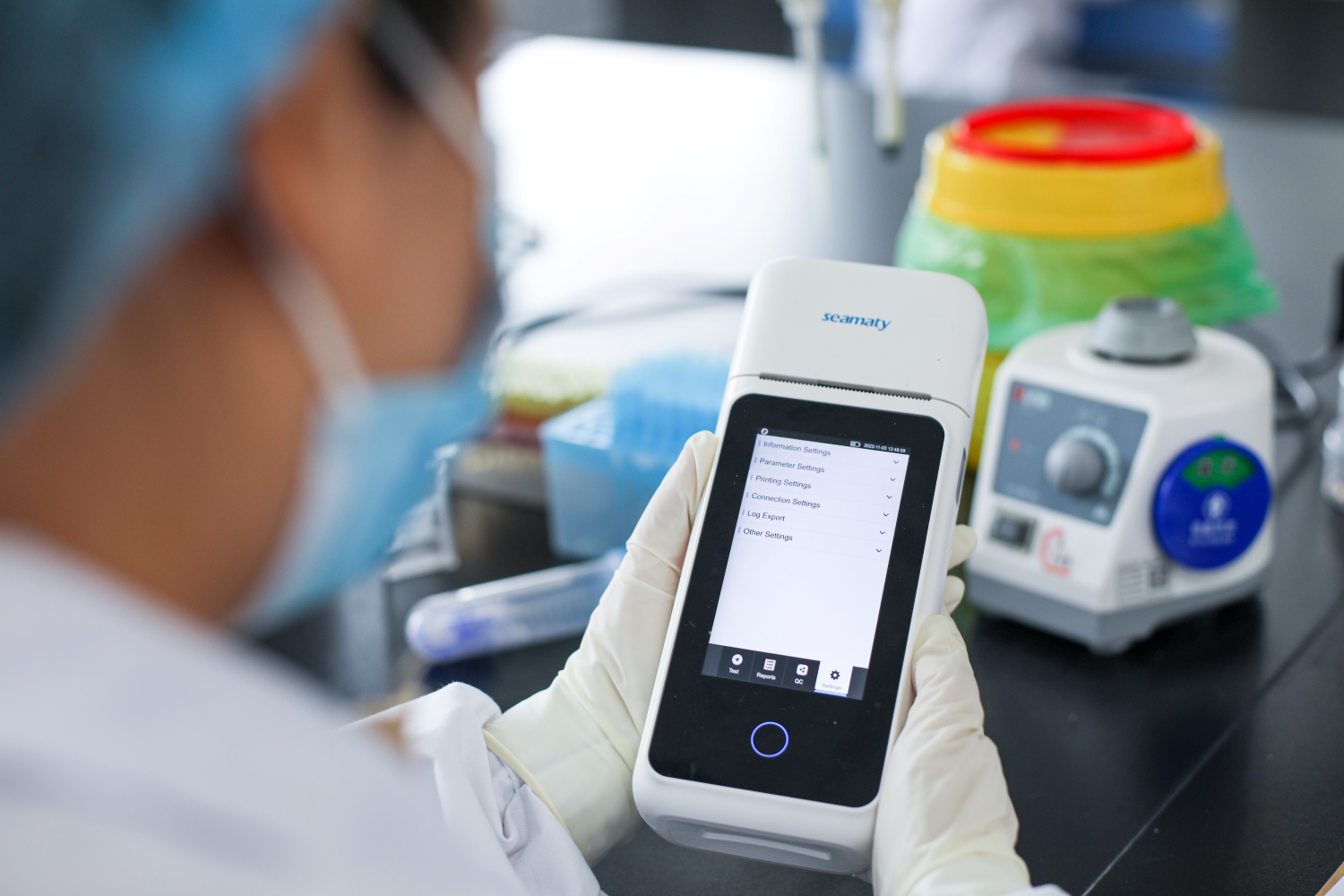
POCT analyzers are often operated by non-laboratory staff (e.g., nurses, paramedics), so intuitive design is critical. Look for touchscreen interfaces, minimal training requirements, and a streamlined workflow (e.g., 3-step operation). Portability is another key factor: handheld or compact analyzers enable testing at the patient’s bedside, in ambulances, or remote clinics—eliminating delays from sample transport to central labs.
4. Sample Compatibility & Test Versatility
Clinical needs vary widely: a primary clinic may require routine chemistry panels, while an ICU needs blood gas and electrolyte testing. Choose an analyzer that supports multiple sample types (whole blood, serum, capillary blood) and a broad menu of parameters to avoid investing in multiple devices. For example, integrated analyzers that combine biochemistry, coagulation, and electrolyte testing offer greater versatility for multi-specialty practices.
5. Maintenance & Operational Cost
Long-term reliability depends on low maintenance and cost-effectiveness. Opt for analyzers with minimal wear-and-tear parts (e.g., no liquid circuits or pumps) and single-use reagent systems—these reduce cleaning time, cross-contamination risks, and reagent waste. Additionally, transparent pricing for reagents and global availability of supplies ensure consistent operations.
6. After-Sales Support & Global Accessibility
A reliable brand backs its products with robust customer support, including technical training, troubleshooting, and timely replacement parts. Brands with a global presence (e.g., regional branches or local partners) ensure faster support, even in remote regions.
7. Scalability & Data Integration
Modern clinical settings require analyzers that integrate with laboratory information systems (LIS) or electronic health records (EHR). Look for devices with USB, LAN, or wireless connectivity to streamline data management, reduce manual documentation errors, and support population health tracking.
Leading POCT Analyzer Brands & Their Strengths
To illustrate how these factors translate to real-world products, let’s explore top brands—including Seamaty’s core offerings—and their unique advantages:
1. Chengdu Seamaty Technology Co., Ltd.
Founded in 2012, Seamaty specializes in medical and veterinary POCT devices, with a global footprint spanning over 100 countries. Certified to ISO 13485:2016, the company operates 3 fully automatic production lines and maintains strict quality control—ensuring consistent performance across its product range. Seamaty’s core POCT analyzers align with the key criteria outlined above:

Core Product Lines
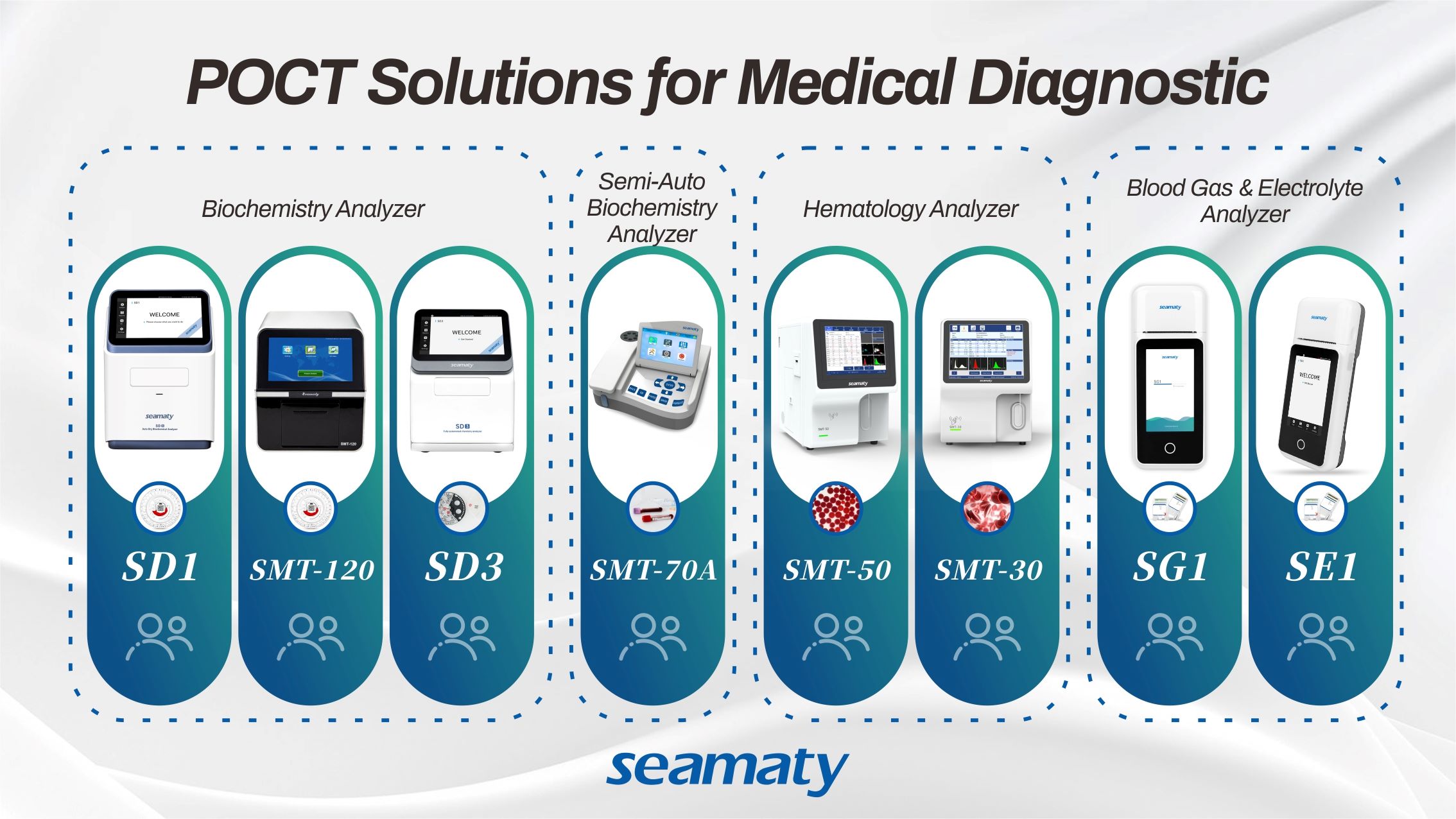
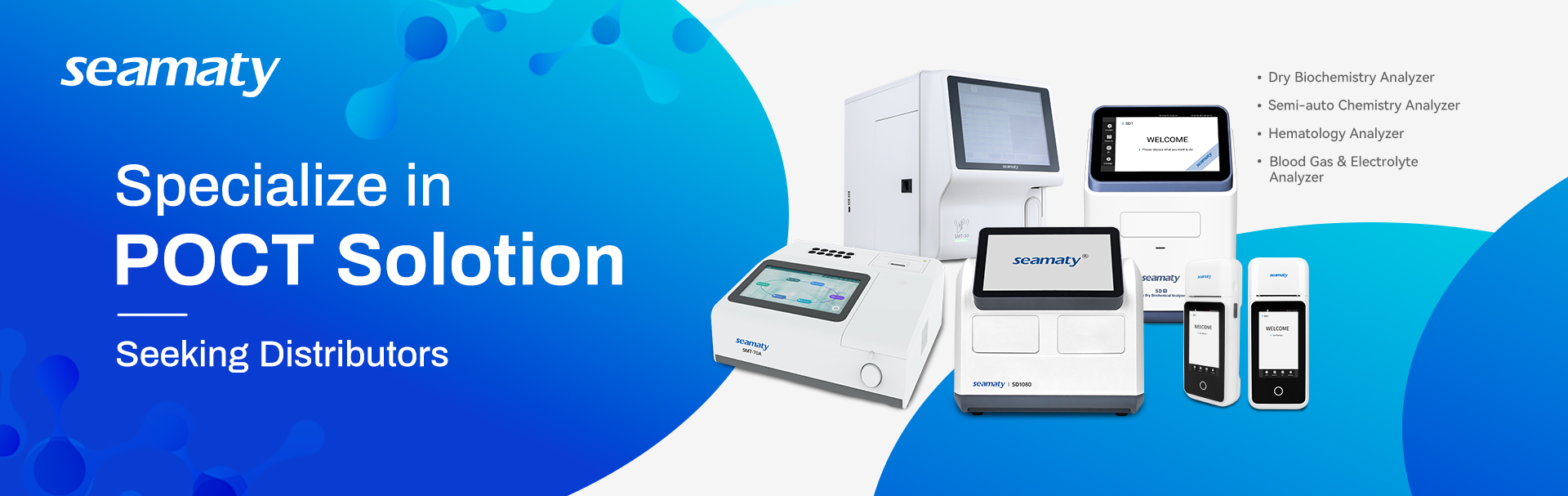
- Fully Automated Dry Chemistry Analyzers: Models like the SD1080 (microfluidic design) and SD3 support simultaneous testing of 6+ samples, with results in 6–9 minutes. They integrate routine biochemistry, coagulation, and immunoassays, accepting whole blood, serum, and capillary blood. The SD1 series offers a compact, user-friendly option for small clinics, with no sample pre-processing required.
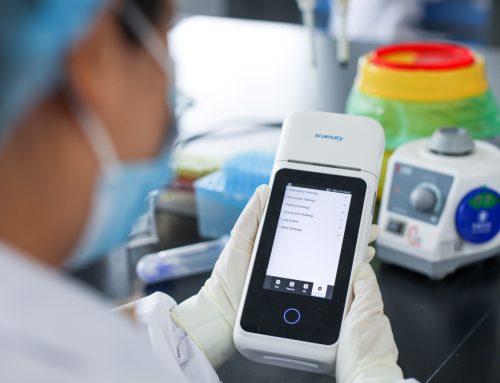
- Blood Gas & Electrolyte Analyzers: The handheld SG1 and SE1 analyzers deliver lab-quality results in 4 minutes, ideal for emergency care and ICU settings. Equipped with built-in lithium batteries and real-time QC, they support on-demand testing anywhere—from hospital bedsides to field clinics.
- Auto Hematology Analyzers: The SMT-50 (5-part) and SMT-30 (3-part) analyzers combine accuracy with affordability, requiring minimal reagents and offering versatile testing options. Compact and portable, they are perfect for small-to-medium laboratories and veterinary practices.
Seamaty’s strength lies in balancing performance with accessibility: its products are cost-effective, low-maintenance, and supported by a global network of partners (with branches in Shenzhen and Germany). For clinics, hospitals, or veterinary practices seeking reliable, scalable POCT solutions, Seamaty’s diverse portfolio covers most clinical needs.
2. Roche Diagnostics (Cobas Series)
Roche is a leader in diagnostic technology, with its Cobas POCT analyzers (e.g., Cobas b 123) renowned for comprehensive test menus and seamless LIS integration. These analyzers excel in large hospitals and reference labs, offering high throughput and advanced parameters (e.g., cardiac markers, infectious disease testing). However, they tend to be larger and more expensive, making them better suited for high-volume settings.
3. Abbott Laboratories (i-STAT Series)
Abbott’s i-STAT handheld analyzers are industry staples for emergency and critical care. Known for ultra-rapid results (2–5 minutes) and broad parameter coverage (blood gas, electrolytes, glucose), they are highly portable and compatible with capillary blood—ideal for ambulances and remote sites. While reliable, their reagent cartridges can be costly for long-term, high-volume use.
4. Siemens Healthineers (RapidPoint Series)
Siemens’ RapidPoint analyzers (e.g., RapidPoint 500e) are designed for ICU and operating room use, emphasizing precision in blood gas and electrolyte testing. They feature advanced sensor technology and temperature correction for accurate results in extreme clinical scenarios. However, their larger footprint and higher maintenance needs make them less suitable for small clinics.
How to Finalize Your Choice
- Assess Your Clinical Needs: Identify priority tests (e.g., blood gas vs. chemistry panels) and volume (e.g., low vs. high patient throughput).
- Test the Device: Request a demo or trial to evaluate ease of use, result speed, and sample handling.
- Verify Support & Supply Chains: Confirm local availability of reagents, parts, and technical support.
- Compare Total Cost of Ownership: Factor in reagent costs, maintenance, and training—not just the upfront price.
- Prioritize Flexibility: Choose an analyzer that can adapt to growing needs (e.g., add-on test panels, LIS integration).
For most healthcare providers—especially small-to-medium clinics, veterinary practices, and resource-limited settings—Seamaty’s POCT analyzers strike the perfect balance of reliability, affordability, and versatility. With ISO certification, global support, and a focus on user-centric design, Seamaty’s products (e.g., SG1 blood gas analyzer, SD1080 dry chemistry analyzer) deliver lab-quality results where and when they matter most.
Explore Seamaty’s Reliable POCT Solutions
To learn more about Seamaty’s full range of POCT analyzers—including fully automated dry chemistry, blood gas & electrolyte, and auto hematology models.
Backed by over a decade of POCT expertise and a presence in 100+ countries, Seamaty is committed to providing reliable, accessible diagnostic tools that empower healthcare providers worldwide. Contact their global partner network today to find a solution tailored to your clinical needs.
Leave A Comment